Imagine a self-driving car navigating a busy intersection. A child chases a ball into the street. The car’s sensors detect the movement instantly. Does it send that data to a server farm three states away, wait for the server to process the image, decide to brake, and send the command back? Or does it process that life-saving decision right there, within the vehicle’s onboard computer?
The answer is obvious. In situations where milliseconds matter, distance is the enemy. This need for speed and proximity is driving a massive shift in how we handle data. We are moving away from centralized clouds and toward the “edge.”
This article explores edge computing—what it is, why it is surging in popularity, and how it is reshaping industries from healthcare to manufacturing.
What Is Edge Computing?
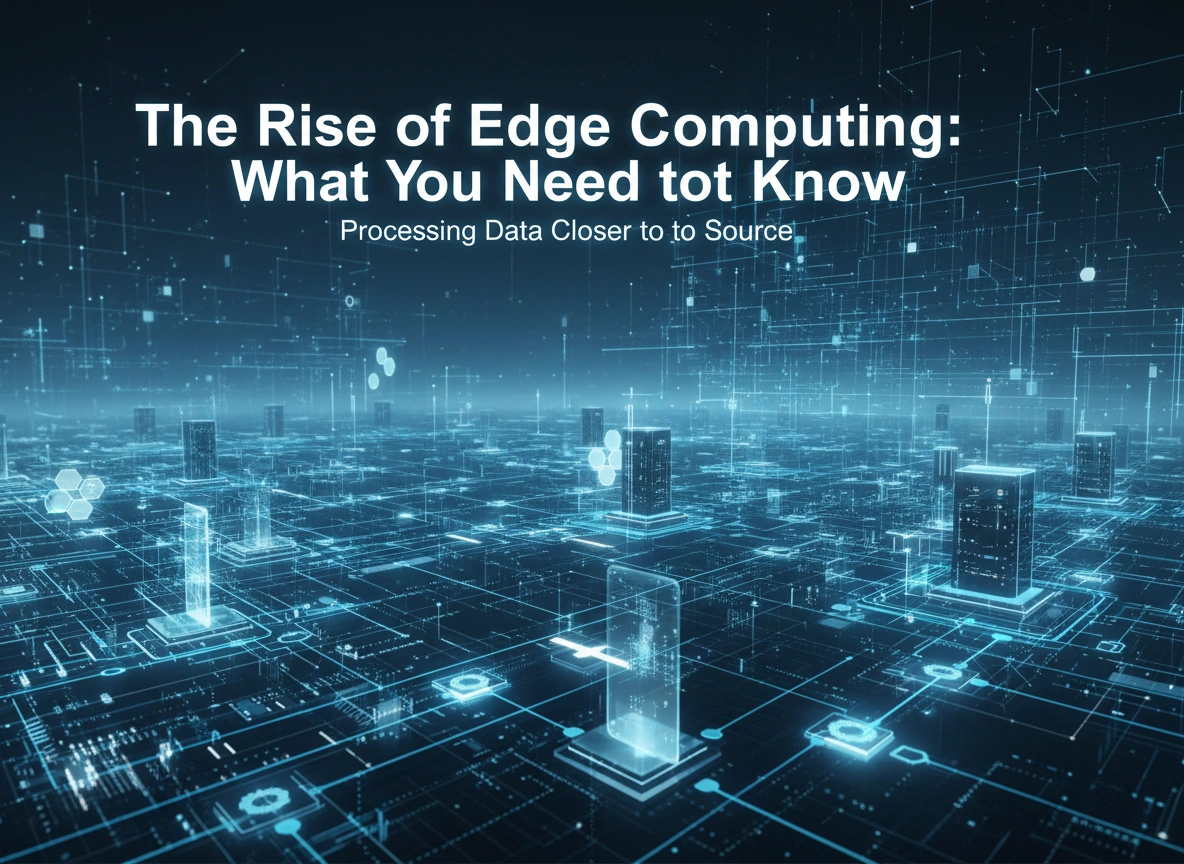
At its core, edge computing is a distributed computing framework. It brings enterprise applications closer to data sources like IoT devices or local edge servers. Instead of sending all data to a centralized data center or cloud for processing, edge computing allows data to be processed near the source—at the “edge” of the network.
Think of it like a restaurant kitchen. The centralized cloud is a massive warehouse pantry miles away. It holds everything, but retrieving ingredients takes time. Edge computing is the prep station right next to the chef. It holds exactly what is needed for immediate cooking, allowing for faster service and fresher results.
The significance of this shift cannot be overstated. By 2025, Gartner predicts that 75% of enterprise-generated data will be created and processed outside a traditional centralized data center or cloud. This is a massive jump from less than 10% in 2018.
Edge vs. Cloud: Understanding the Difference
To truly grasp the value of the edge, you must understand how it differs from traditional cloud computing. They are not mutually exclusive; rather, they complement each other.
The Centralized Cloud Model
Cloud computing relies on a centralized model. Data is gathered from various sources and sent to massive data centers. These centers have immense processing power and storage capacity. They are excellent for:
- Deep analysis of historical data.
- Training complex AI models.
- Storing data that doesn’t require immediate access.
The Distributed Edge Model
Edge computing is decentralized. Processing power is placed physically closer to where the data originates. This could be inside a factory robot, a retail store camera, or a medical device. The edge is superior for:
- Real-time decision making.
- Filtering data before sending it to the cloud.
- Operating in environments with poor connectivity.
While the cloud is the “brain” capable of deep thought and long-term memory, the edge acts as the “reflexes”—reacting instantly to immediate stimuli.
Key Benefits of Processing at the Edge
Why are companies investing billions into edge infrastructure? The benefits solve fundamental problems inherent in our increasingly connected world.
1. Drastically Reduced Latency
Latency is the time it takes for data to travel from point A to point B. In high-stakes environments, high latency is unacceptable. Edge computing eliminates the long round-trip to the cloud. By processing data locally, response times drop from hundreds of milliseconds to just a few. This speed is critical for autonomous vehicles, high-frequency trading, and online gaming.
2. Bandwidth Conservation
Sending terabytes of raw data to the cloud is expensive and clogs network bandwidth. An oil rig with hundreds of sensors might generate massive amounts of data daily. Most of this data is mundane—”all systems normal.” Edge computing allows the rig to filter this data locally. It only sends relevant anomalies or summary reports to the cloud, saving massive amounts of bandwidth and storage costs.
3. Enhanced Data Security and Privacy
When data travels, it is vulnerable. Edge computing minimizes the distance data must travel and reduces the number of transition points where a breach could occur. Furthermore, sensitive data—like patient health records or factory trade secrets—can be processed and stored locally, never leaving the secure on-premise network. This helps organizations comply with strict data sovereignty laws like GDPR.
4. improved Reliability
A centralized cloud creates a single point of failure. If the internet connection goes down, operations stop. Edge devices can operate independently. A smart factory using edge computing can continue production even if its connection to the main corporate cloud is severed, syncing data later once connectivity is restored.
Transforming Industries: Real-World Applications
Edge computing isn’t just theoretical; it is actively revolutionizing major sectors.
Healthcare: Saving Lives in Real-Time
In modern hospitals, patient monitoring devices generate constant streams of data. Edge computing allows these devices to analyze vitals locally. If a patient’s heart rate drops dangerously, the device alerts staff immediately, without waiting for cloud validation. Additionally, during remote surgeries, robotic arms require zero-latency feedback to ensure precision. Edge processing makes this possible.
Manufacturing: The Smart Factory
Industry 4.0 relies heavily on the edge. Sensors on assembly lines monitor equipment health in real-time. If a vibration sensor on a crucial motor detects an anomaly suggesting imminent failure, the edge system can shut down the machine instantly to prevent damage. This “predictive maintenance” saves millions in downtime.
Retail: Personalized Shopping
Retailers use edge computing to merge physical and digital experiences. Smart mirrors in dressing rooms can read RFID tags on clothing items and suggest matching accessories on a display instantly. Video analytics processed at the store level can track foot traffic patterns to optimize layout without streaming invasive video feeds to a central server.
Autonomous Vehicles
Self-driving cars are perhaps the ultimate edge devices. They generate roughly 2 petabytes of data annually. They cannot rely on cellular networks to spot a pedestrian. They must process LIDAR, radar, and camera data onboard to make split-second driving decisions.
The Hurdles: Challenges and Limitations
Despite the advantages, shifting to the edge is not without its difficulties.
Infrastructure Costs
Deploying edge computing requires hardware. Instead of one massive data center, a company might need thousands of small edge servers or smart gateways. The capital expenditure (CapEx) for installing this distributed hardware can be steep.
Complexity in Management
Managing one centralized cloud is challenging; managing 10,000 distributed edge nodes is exponentially harder. IT teams must figure out how to update software, patch security vulnerabilities, and monitor the health of devices that might be located in remote, hard-to-reach locations.
Security at Scale
While keeping data local offers privacy benefits, the physical security of edge devices is a concern. A server in a Google data center is guarded by biometric locks and armed security. An edge device attached to a traffic light or a wind turbine is physically accessible to bad actors who might tamper with it.
Data Silos
When data is processed locally, there is a risk that valuable insights remain trapped at the edge. Organizations must design robust data pipelines to ensure that while immediate decisions happen locally, valuable summary data still makes it back to the central system for long-term analysis.
The Future: IoT, AI, and 5G
The rise of edge computing is intimately tied to other emerging technologies. It serves as the glue that makes the “Internet of Things” (IoT) viable. As we connect billions of devices, the cloud simply cannot handle the sheer volume of data. The edge is the necessary release valve.
The 5G Catalyst
5G networks are a massive accelerator for edge computing. 5G provides the high-speed, low-latency wireless pipe that connects edge devices. Multi-access Edge Computing (MEC) is a network architecture concept that integrates edge computing capabilities directly into the telecom network infrastructure, bringing processing power even closer to mobile users.
AI at the Edge
We are also seeing the migration of Artificial Intelligence (AI) to the edge. Traditionally, AI models were trained and run in the cloud. Now, with specialized “Edge AI” chips, we can run inference models locally. This means a security camera can identify a shoplifter, or a drone can navigate a forest, using onboard AI without needing internet connectivity.
Conclusion
The pendulum of computing history is swinging again. We moved from mainframes to PCs, then to the cloud, and now toward the edge. This doesn’t mean the cloud is dying. Instead, we are entering an era of hybrid computing where the cloud and the edge work in harmony. The cloud will remain the center for deep learning and massive storage, while the edge will handle the immediate, tactical processing required by our physical world.
For business leaders and IT professionals, the message is clear: data gravity is real. Moving data is hard; moving computation is easier. To stay competitive in a world demanding real-time results, you must bring your processing power to where the action is.
Actionable Next Steps
- Audit your data: Identify which business processes suffer from latency or high bandwidth costs. These are your prime candidates for edge adoption.
- Start small: Pilot an edge project in a specific area, such as predictive maintenance for one production line or localized data processing for one branch office.
- Evaluate security: Before deploying distributed devices, establish a rigorous security protocol for physical and digital access to edge nodes.
Please visit website for more info.