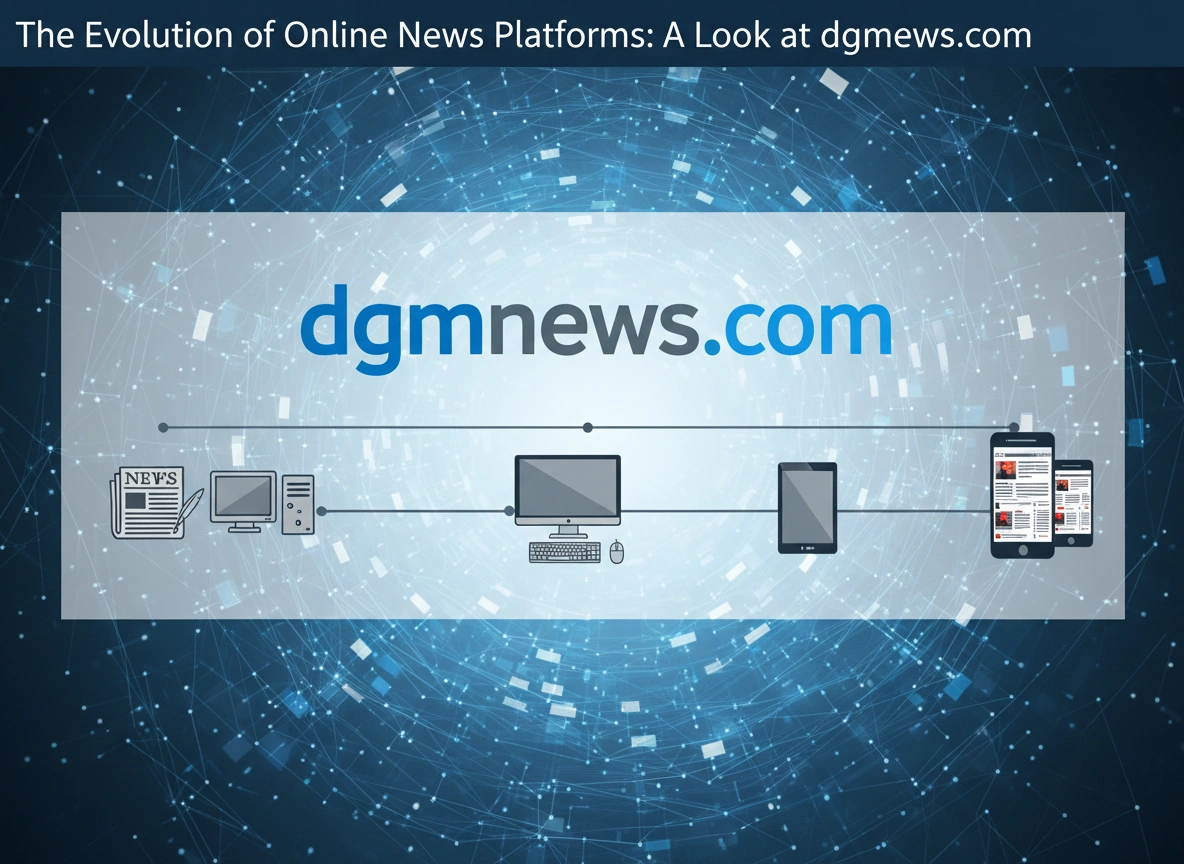
The landscape of journalism has undergone a seismic shift over the last three decades. We have moved from the ink-stained fingers of the morning broadsheet to the instantaneous, pixelated reality of the smartphone notification. This transition wasn’t merely a change in medium; it was a fundamental restructuring of how humanity consumes information. While giants like The New York Times or CNN often dominate discussions about digital transformation, the true pulse of modern media is often found in agile, niche-specific platforms that have adapted to the web’s unique architecture.
One such platform that serves as an interesting case study in this evolution is dgmnews.com. By examining the trajectory of online news through the lens of specific platforms like this, we gain a clearer understanding of where journalism has been and where it is heading.
From Static Pages to Dynamic Ecosystems
To appreciate the modern news environment, we must first look back at the early days of the internet. In the mid-to-late 1990s, “going online” was a deliberate action. News websites were often little more than digital brochures—static HTML pages where newspaper articles were pasted without modification. The communication was one-way. Editors decided what was important, and the audience consumed it passively.
The Rise of Web 2.0 and User Interaction
The early 2000s introduced Web 2.0, changing the internet from a library into a conversation. Blogs, comment sections, and RSS feeds allowed users to curate their own news diets. This era birthed the concept of “citizen journalism,” where everyday people could report on events faster than traditional news crews.
This is the environment where modern platforms began to germinate. The successful sites weren’t just broadcasting; they were building communities. They realized that in a digital space, engagement is the currency of value.
The Technological Pillars of Modern News
Today, a successful news platform relies on sophisticated technology that goes far beyond simple text display. Three major advancements have defined the current era:
- Algorithmic Curation: Platforms now use AI to understand user preferences, serving content that matches individual interests.
- Responsive Design: With over 55% of global web traffic coming from mobile devices, news must be readable on screens of all sizes.
- Multimedia Integration: The days of text-only reporting are over. Video, interactive infographics, and podcasts are standard requirements.
Case Study: dgmnews.com and the Modern News Architecture
When we look at dgmnews.com, we see a reflection of these broader industry trends. While specific internal metrics of the site are proprietary, its structure and content strategy reveal how modern platforms survive in a competitive attention economy.
Adaptability and Niche Focus
Unlike the monolithic news organizations of the past that tried to be everything to everyone, platforms like dgmnews.com often succeed by refining their scope. The modern reader is overwhelmed by information overload. A generic news site often feels like noise.
dgmnews.com appears to leverage a streamlined interface that prioritizes readability over clutter. This aligns with the “clean web” movement, a reaction against the ad-heavy, pop-up-ridden designs that plagued the internet in the early 2010s. By focusing on specific verticals or trending topics, platforms of this size can pivot faster than legacy media organizations.
User Engagement Strategies
Engagement today is not just about page views; it is about “dwell time” and interaction. Modern platforms employ several strategies to keep users on-site:
- Related Content Engines: Smart internal linking structures keep the reader moving from one story to the next.
- Social Integration: The ability to share content seamlessly to social media bridges the gap between the platform and the public square of apps like X (formerly Twitter) or LinkedIn.
- Speed Optimization: Google research indicates that 53% of mobile site visits are abandoned if pages take longer than three seconds to load. Modern architecture prioritizes lightweight code to ensure immediate access.
The Shift in Revenue Models
The evolution of content is inextricably linked to the evolution of revenue. The “original sin” of the internet was the expectation that information should be free. This led to the advertising model, which incentivized clickbait and sensationalism.
However, we are seeing a correction. Platforms are increasingly diversifying. While ad revenue remains significant, successful modern sites often incorporate affiliate marketing, sponsored content, or subscription tiers.
dgmnews.com operates within this nuanced economy. By providing value that attracts a specific demographic, the platform becomes attractive to advertisers looking for targeted reach rather than broad, scattershot exposure. This represents a maturation of digital marketing, moving from quantity (millions of impressions) to quality (high-intent engagement).
The Role of Trust and Verification
Perhaps the most critical challenge facing online news today is credibility. The democratization of publishing meant that anyone could be a publisher, but it also dissolved the gatekeepers who ensured factual accuracy.
In this context, the role of a platform like dgmnews.com becomes vital. Mid-sized platforms must work harder to establish trust than legacy brands with century-old reputations. This is often achieved through:
- Transparency: Clearly identifying authors and sources.
- Consistency: Publishing regularly to establish a reliable presence.
- Voice: Maintaining a professional tone that distinguishes the site from personal blogs or rumor mills.
Trust is the ultimate asset. Edelman’s Trust Barometer has shown fluctuating trust in media globally, and digital-native platforms have a steep hill to climb. Success depends on rigorous fact-checking and resisting the urge to publish unverified rumors for quick traffic.
Future Horizons: What Lies Ahead?
As we look toward the next five to ten years, the evolution of platforms like dgmnews.com will likely be driven by Artificial Intelligence and decentralized technologies.
The AI Revolution in Newsroom
AI is already being used to write financial summaries and sports box scores. Soon, it will assist in deeper investigative work, sifting through massive datasets to find patterns a human reporter might miss. For platforms like dgmnews.com, this could mean the ability to produce high-quality, data-driven journalism with smaller teams.
Blockchain and Content Authenticity
To combat deepfakes and misinformation, we may see the adoption of blockchain technology to verify the origin of photos and articles. A digital “watermark” could prove that a news story on dgmnews.com is authentic and hasn’t been tampered with.
The Return to Direct Relationships
The reliance on search engines and social media algorithms is risky. If an algorithm changes, a site can lose half its traffic overnight. The future lies in owning the audience relationship directly—through newsletters, push notifications, and dedicated apps. We can expect platforms to invest heavily in these direct channels.
Conclusion
The journey of online news from static HTML pages to the dynamic, intelligent ecosystems of today is a testament to technological innovation. Platforms like dgmnews.com are not just observers of this history; they are active participants in shaping it.
They demonstrate that the future of news is not necessarily in massive conglomerates, but in agile, tech-savvy entities that understand the specific needs of their digital audience. By balancing speed with accuracy, and technology with human insight, these platforms ensure that journalism remains a vital pillar of our connected society.
For the modern reader, the takeaway is clear: the medium matters. Understanding how platforms function helps us become more critical, engaged consumers of the information that shapes our world.