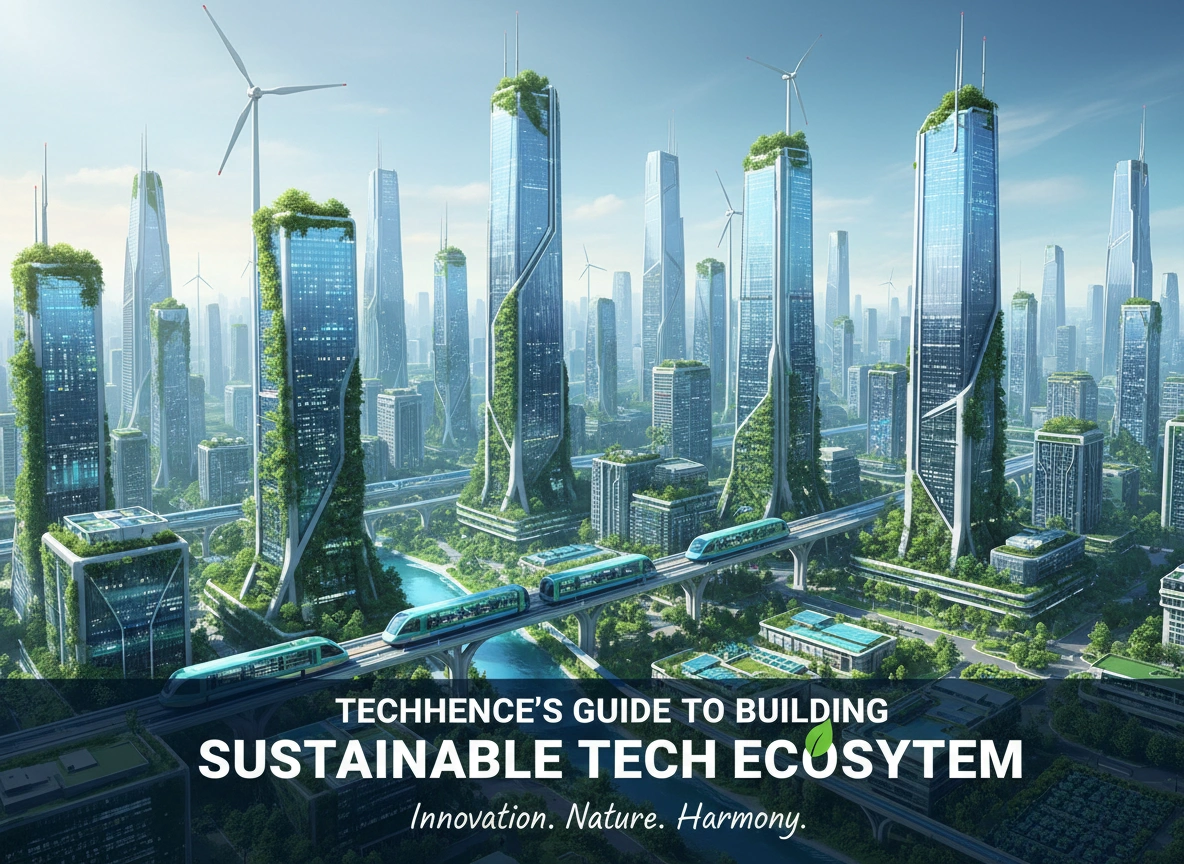
Sustainability is no longer a buzzword; it is a business imperative. The technology sector, often hailed as the engine of modern progress, faces a unique paradox. We build tools that can solve the world’s most pressing environmental challenges, yet the very act of building, powering, and discarding these tools contributes significantly to the problem. A sustainable tech ecosystem isn’t just about using less paper or recycling soda cans in the breakroom. It requires a fundamental shift in how we design products, manage data, and interact with our communities.
This guide explores what it truly means to build a sustainable tech ecosystem. We will examine the pivotal role of forward-thinking organizations, outline concrete strategies for reducing environmental impact, and highlight why collaboration is the secret ingredient to lasting change. Whether you are a startup founder, a CTO at a major enterprise, or a conscious consumer, the path to a greener digital future starts here.
The Mandate for a Green Digital Frontier
A sustainable tech ecosystem refers to an interconnected network of hardware, software, services, and human practices designed to minimize environmental harm while maximizing social and economic value. It moves beyond the linear “take-make-dispose” model of the past and embraces circularity. In this ecosystem, resources are kept in use for as long as possible, and the end-of-life for one product becomes the beginning for another.
Why does this matter now? The digital carbon footprint is growing. Data centers alone consume an estimated 1% of global electricity, a figure that could rise significantly with the boom in AI and machine learning. Electronic waste (e-waste) is the fastest-growing waste stream on the planet. Building a sustainable ecosystem ensures that technological advancement doesn’t come at the cost of the planet’s health. It secures resources for future innovation and aligns business operations with the values of a generation that demands corporate responsibility.
The Role of Tech Leaders in Driving Change
Companies like Techhence play a critical role as architects of this new ecosystem. Leadership in this space goes beyond compliance; it requires proactive innovation. Tech leaders act as the catalyst for industry-wide shifts by setting ambitious standards that force competitors and partners to level up.
When organizations commit to sustainability, they do more than reduce their own footprint. They create a ripple effect. By demanding green supply chains, they push manufacturers to adopt cleaner processes. By designing energy-efficient software, they help clients lower their own emissions.
Techhence and similar entities serve as testbeds for new technologies. Whether it is piloting liquid cooling systems for servers or experimenting with biodegradable hardware casings, these companies take on the initial risk to prove that green tech is not just viable, but profitable. This leadership transforms sustainability from a “nice-to-have” feature into a core competitive advantage.
Strategies for a Greener Tech Stack
Building a sustainable ecosystem requires a multi-faceted approach. There is no silver bullet, but there are proven strategies that, when combined, create significant impact.
Eco-Friendly Product Design
Sustainability starts on the drawing board. Approximately 80% of a product’s environmental impact is determined during the design phase.
- Modularity: Designing devices that can be easily repaired or upgraded extends their lifespan. Instead of replacing a whole laptop because the battery died, users should be able to swap out the component.
- Material Selection: Moving away from virgin plastics and conflict minerals is essential. Using recycled aluminum, ocean-bound plastics, and bio-based materials reduces the extractive burden on the earth.
- Software Efficiency: Code can be green. Bloated software requires more processing power, which drains batteries faster and demands more electricity from the grid. optimizing code for efficiency is a direct contribution to sustainability.
Energy-Efficient Operations
The invisible infrastructure of the internet is energy-hungry. Transitioning to renewable energy sources is the most direct way to decarbonize.
- Green Data Centers: Migrating to cloud providers that operate on 100% renewable energy is a powerful step. Furthermore, utilizing AI to optimize cooling systems in data centers can reduce energy consumption by up to 40%.
- Smart Offices: Utilizing IoT sensors to manage lighting and HVAC systems ensures energy is only used when and where it is needed.
- Remote Work Policies: While often discussed in terms of work-life balance, remote work significantly cuts commuting emissions and reduces the energy load of massive corporate headquarters.
Responsible E-Waste Management
The end of a product’s life is a critical juncture. Currently, a staggering amount of e-waste ends up in landfills, leaking toxic substances like lead and mercury into the soil.
- Take-Back Programs: Companies must take responsibility for their products after they are sold. Robust trade-in and recycling programs ensure valuable materials like gold, copper, and rare earth elements are recovered.
- Certified Recycling Partners: Partnering with e-Stewards or R2 certified recyclers ensures that waste isn’t just shipped to developing nations but is processed safely and ethically.
The Power of Collaboration
No single company can build an ecosystem alone. By definition, an ecosystem requires the interaction of diverse organisms. In the tech world, this means collaboration between the private sector, governments, and consumers.
Government and Policy
Regulation provides the guardrails for sustainability. Governments can incentivize green innovation through tax breaks and grants while penalizing excessive waste. Policies like the European Union’s “Right to Repair” legislation force manufacturers to make devices longer-lasting and repairable. Tech companies must engage with policymakers to help shape regulations that are both ambitious and technically feasible.
Industry Alliances
Pre-competitive collaboration is vital. When tech giants come together to standardize charging ports or agree on transparency in supply chain reporting, the entire industry benefits. Alliances allow companies to share best practices and pool resources to solve complex problems, such as developing new battery chemistries that don’t rely on cobalt.
Consumer Empowerment
Consumers wield immense power. Every purchase is a vote for the kind of future they want. However, they need transparency to make informed choices. Companies must provide clear information about the carbon footprint and repairability of their products. When consumers demand green tech, the market responds.
Real-World Success Stories
The transition to a sustainable tech ecosystem is already underway, evidenced by innovative initiatives across the globe.
Case Study 1: The Circular Phone
Fairphone, a Dutch social enterprise, has revolutionized the smartphone market by prioritizing modularity and ethical sourcing. Their phones are designed to be opened and repaired by the user with a simple screwdriver. They transparently map their supply chain to ensure conflict-free minerals. While they are a smaller player, they have proven that a modular, ethical smartphone is commercially viable, pushing larger competitors to reconsider their glued-shut designs.
Case Study 2: Carbon-Negative Data Centers
Microsoft has pledged not just to be carbon neutral, but carbon negative by 2030. They are experimenting with “Project Natick,” an initiative to place data centers underwater. This utilizes the naturally cool ocean temperatures for cooling, eliminating the need for energy-intensive air conditioning, while potentially leveraging offshore wind and wave energy for power.
Case Study 3: Server Heat Reuse
In Stockholm, data center parks are integrated into the city’s heating infrastructure. The excess heat generated by thousands of servers—usually vented as waste—is captured and fed into the district heating system to warm thousands of homes. This turns a waste product into a valuable community resource, exemplifying the principles of industrial symbiosis.
Conclusion: A Call for Collective Action
Building a sustainable tech ecosystem is a marathon, not a sprint. It requires a fundamental rethinking of value. We must measure success not just by quarterly profits or daily active users, but by the longevity of our products and the health of the environment we operate in.
For tech leaders and innovators, the message is clear: sustainability is an opportunity for reinvention. It invites us to solve harder problems and build more resilient systems. For consumers, it is an invitation to be mindful stewards of the technology we use every day.
We stand at a crossroads. We can continue with business as usual and face the consequences of resource scarcity and climate instability, or we can choose the path of innovation and responsibility. By embracing eco-design, championing renewable energy, and fostering deep collaboration, we can build a tech ecosystem that supports human progress without compromising the planet. The blueprint is here; it is time to build.
Please visit this website for more info.