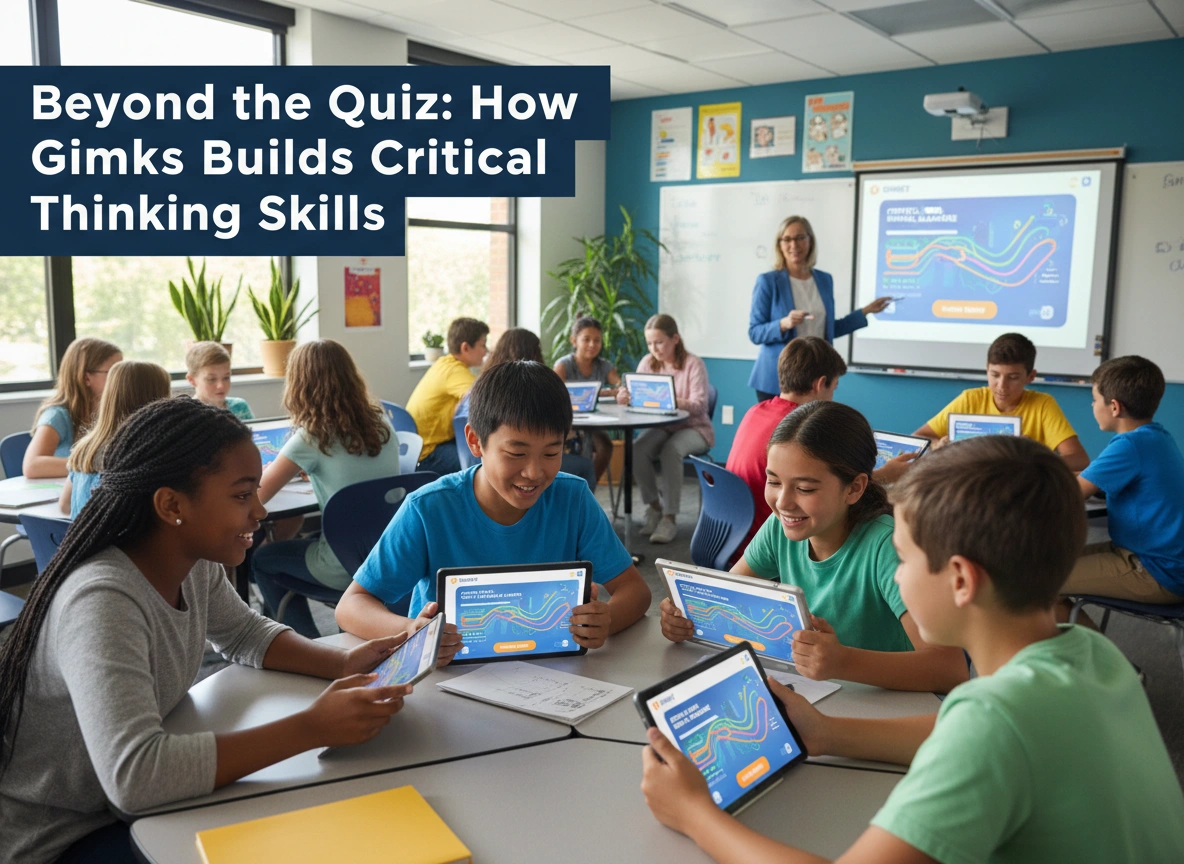
In the search for educational tools that do more than just test memory, educators are increasingly turning to platforms that engage students on a deeper level. Gimkit has emerged as a popular choice, known for its fast-paced, game-show-style quizzes. But beyond the surface of a fun review game lies a powerful engine for developing essential cognitive abilities. Gimkit’s design intentionally pushes students beyond simple recall, creating an environment where critical thinking and problem-solving skills can flourish.
This article explores how Gimkit’s unique features and gameplay mechanics foster these crucial 21st-century skills. We will examine how its strategic elements, collaborative modes, and immediate feedback loops encourage students to think analytically, adapt their strategies, and work together to overcome challenges. By understanding these mechanisms, educators can leverage Gimkit not just as a tool for assessment, but as a dynamic platform for cognitive development, preparing students for the complex problems they will face beyond the classroom.
What is Critical Thinking in the Classroom?
Before diving into Gimkit’s specific features, it’s important to define what we mean by critical thinking and problem-solving in an educational context. It’s not just about knowing the right answer; it’s about the process used to arrive at that answer. Critical thinking involves analyzing information, evaluating evidence, identifying connections, and making reasoned judgments. Problem-solving is the application of these skills to overcome an obstacle or achieve a specific goal.
In a classroom setting, this looks like:
- Analysis: Students break down complex questions or scenarios into smaller, more manageable parts.
- Strategy: They develop a plan of action based on the information available.
- Adaptation: When a plan isn’t working, they assess the situation and change their approach.
- Collaboration: They communicate with peers to combine knowledge and devise collective solutions.
A tool that effectively promotes these skills moves students from being passive recipients of information to active participants in their own learning.
The Strategic Core of Gimkit: More Than Just Speed
At its heart, Gimkit is a question-and-answer game. Students earn in-game currency for correct answers, which they can then use to buy upgrades and power-ups. This simple economic layer is where the development of critical thinking begins. It transforms a standard quiz into a strategic resource management challenge.
Decision-Making with In-Game Economics
When students earn money, they immediately face a series of choices. Should they save up for a powerful, long-term upgrade or buy a cheaper, immediate boost? This requires them to weigh short-term gains against long-term advantages. For example, purchasing a “Streak Bonus” upgrade early on might yield more currency over time, but it requires sacrificing the immediate gratification of smaller power-ups.
This process mirrors real-world financial literacy and project management. Students must:
- Evaluate Options: Compare the costs and potential benefits of different upgrades.
- Prioritize Spending: Decide which purchases will provide the greatest return on investment for their specific goals.
- Manage Risk: Some upgrades offer high rewards but come with risks, forcing students to make calculated decisions.
This constant cost-benefit analysis forces them to think several steps ahead. They aren’t just answering questions; they are managing a virtual portfolio and developing a strategy to maximize their success.
Adapting to a Dynamic Environment
Gimkit’s gameplay is not static. The introduction of power-ups that can affect other players adds a layer of unpredictability. A student might be saving for a major upgrade only to have their earnings reduced by another player’s “Reducer” power-up. This forces them to adapt on the fly.
This dynamic environment cultivates resilience and flexible thinking. When faced with a setback, a student must quickly reassess their strategy. Do they continue with their original plan, or do they pivot? Perhaps they switch from saving to spending their currency on defensive power-ups or retaliatory ones. This real-time problem-solving is a low-stakes way to practice reacting to unexpected challenges, a skill that is invaluable in academics and professional life.
Collaboration and Communication in Team Modes
While classic Gimkit focuses on individual strategy, game modes like “Humans vs. Zombies” and “The Floor is Lava” shift the focus to collective problem-solving. These modes require students to work together toward a common goal, adding a rich social dimension to the learning experience.
Humans vs. Zombies: A Lesson in Collective Strategy
In “Humans vs. Zombies,” students are divided into two teams. The humans answer questions to earn shields and power-ups to defend themselves, while the zombies try to “infect” them. Success for the human team depends entirely on their ability to communicate and coordinate.
Students quickly realize that individual success is not enough. They might huddle together to discuss strategy: Who should focus on buying shields for the group? Who should save up for the powerful “Med-Pack” that can heal multiple teammates? These conversations are a form of collaborative problem-solving. Students must:
- Define Roles: Assign different tasks to team members based on their strengths or current resources.
- Share Information: Communicate threats and opportunities to the rest of the group.
- Negotiate and Compromise: Decide on a group strategy that everyone can agree to follow.
This mode teaches students that complex problems are often best solved through cooperation. They learn to trust their peers, communicate clearly under pressure, and understand the value of a unified approach.
Real-Time Feedback: The Engine for Improvement
One of the most powerful aspects of Gimkit is its instantaneous feedback loop. When a student answers a question, they immediately know if they were right or wrong. This is crucial for both content mastery and skill development.
Correcting Misconceptions Instantly
From a content perspective, instant feedback prevents students from reinforcing incorrect information. If they answer a question wrong, they see the correct answer immediately. This allows them to self-correct in the moment, rather than waiting days for a graded test to discover their misunderstanding.
Refining Strategy Through Trial and Error
This feedback loop is just as important for problem-solving. When a student tries a new strategy—like saving all their money for one big purchase—they see the results in real-time. If the strategy fails and they fall behind, they have the opportunity to analyze why it didn’t work and try a different approach in the same game session.
This cycle of hypothesizing, testing, and refining is the essence of the scientific method and a cornerstone of effective problem-solving. Gimkit provides a safe and engaging space for students to experiment with different strategies without the fear of a failing grade. The “failure” of a chosen strategy is not a final outcome but simply a data point to inform their next decision.
Preparing Students for Real-World Challenges
The skills cultivated through Gimkit have direct applications beyond the classroom walls. The modern workplace demands individuals who can think critically, adapt to change, and collaborate effectively to solve complex problems.
By engaging with Gimkit’s strategic gameplay, students are essentially running a small, fast-paced project. They set goals, allocate resources, react to unforeseen obstacles, and work with a team. A collaborative game of “The Floor is Lava” mirrors a team project where every member must contribute for the group to succeed. Managing in-game currency to achieve a high score is a simplified but effective lesson in budgeting and investment.
Platforms like Gimkit help bridge the gap between abstract academic knowledge and its practical application. They demonstrate that the principles of strategy, analysis, and collaboration are not just concepts to be memorized for a test but are active skills to be used to achieve a goal.
Conclusion: A Tool for Deeper Learning
Gimkit’s appeal may start with its energetic and competitive format, but its true educational value lies in its ability to nurture critical thinking and problem-solving. By integrating strategic decision-making, collaborative challenges, and instant feedback into a game-based framework, it encourages students to move beyond rote memorization.
Educators who use Gimkit can actively guide students to recognize the skills they are developing. A post-game discussion can be incredibly powerful: Why did one team succeed? What strategy worked best? What would you do differently next time? These reflections help solidify the learning and make students more aware of their own thought processes.
Ultimately, Gimkit is more than just a digital flashcard deck. It is a playground for the mind—a dynamic environment where students can practice analyzing situations, devising strategies, adapting to new information, and working together to solve problems. In doing so, they are not just preparing for their next test; they are building the cognitive foundation they need to thrive in a complex and ever-changing world.